Integrating Breathwork for Exercise Physiology
If I were to ask you why you work in Exercise Physiology, your answer might be:
"I am passionate about helping people"
"I care about health and longevity"
"I love exercise and the science of the human body"
But if we truly want to practise by those statements, we must appreciate the intricacies of the human body and be willing to expand our perspectives.
As an Exercise Scientist of seven years with a background in Physiotherapy study, I decided to specialise as a Breath Practitioner after experiencing first-hand the detrimental effects of stress and burnout, despite appearing "healthy" at face value.
So yes, this blog post is about breathwork and the nervous system. But to understand the role of the breath, we need to appreciate the biopsychosocial approach to health and the body-mind unity, where the mind directly influences our physiology and behaviour and vice versa, with the breath at the centre of it all.
Chronic Stress & Burnout: Real-Life Experience
Personal stories can shape how we perceive this work and how we integrate it into prescriptions for clients. Rather than just adding to the knowledge bank, it's about knowing how to apply it to real-life circumstances. So I am sharing my story to give you some context.
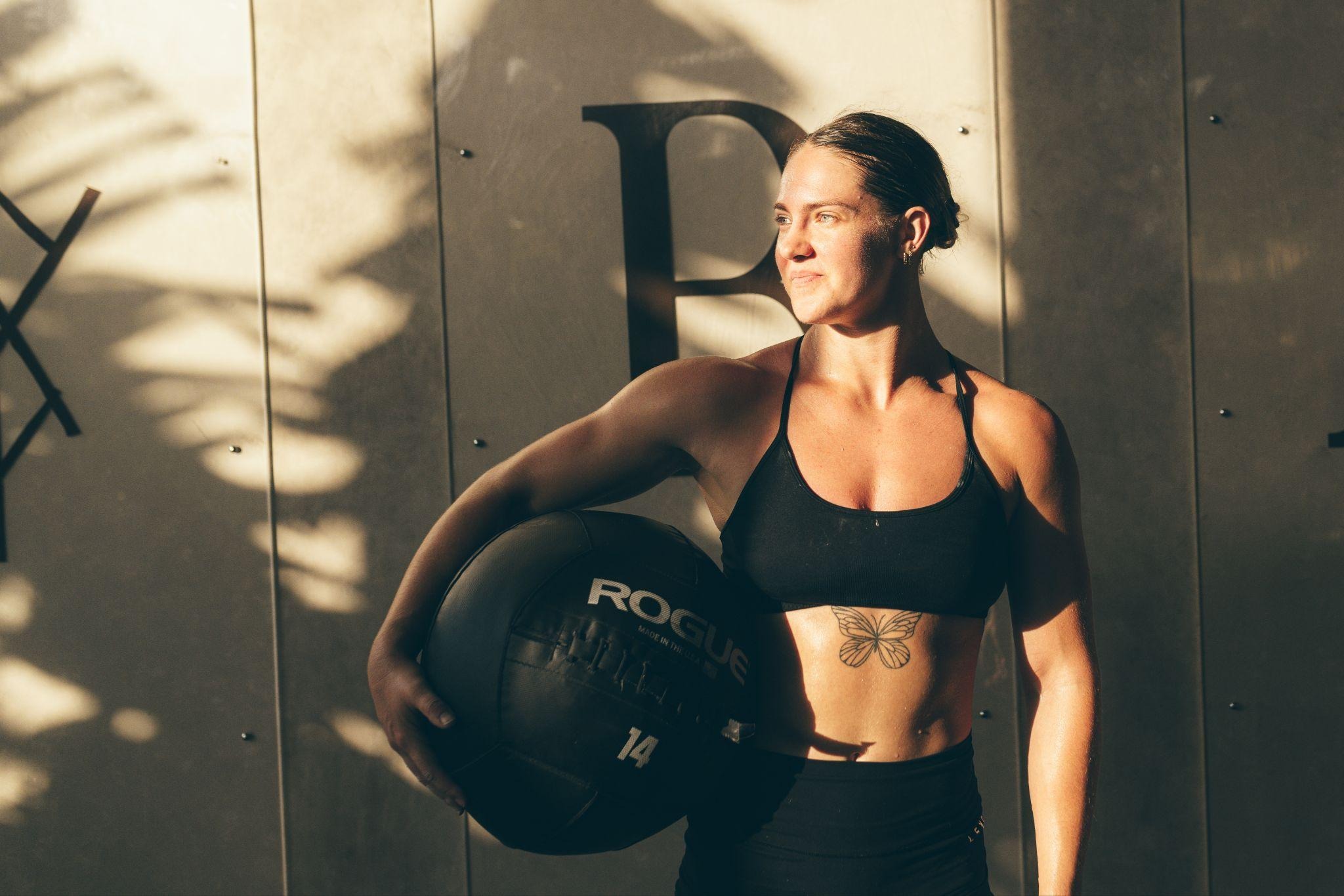
Back in 2024, I experienced severe symptoms of stress and burnout. I had just returned from competing for Australia as a powerlifter, I was quitting my casual coaching job, opening my own coaching business, managing 25 online clients and working a second casual job to pay the bills.
My symptoms became so severe they presented as loss of control and feeling all down the left side of my body, happening three to four times per week for about a month. I was in and out of hospital, genuinely thinking I was having a stroke, and it was incredibly scary to experience first-hand.
Working from my hospital bed, coming home and training when I felt good enough to, and pretending everything was okay because I just had to keep moving forward... right?
Long story short, I was diagnosed with hemiplegic migraines, attributed to chronic stress and burnout. My body couldn't handle the allostatic load anymore, and it started to shut down on me.
This was the turning point where I thought enough is enough, so I began researching nervous system regulation, moved to the country to live a slower life, learnt about the breath and started focusing not just on performance, but long-term sustainability as an athlete, business owner and ultimately, for my overall health.
I learnt the hard way and paid the price for my ambition.
But I began to question: did I need to pay a price in the first place?
The Science Behind the Breath
With constant stimulation and distraction in today's society, it's becoming more common to lose connection to our body and mind. Our breath is at the centre of it all, and this disconnect can lead to health complications and a lack of awareness of our internal state, which is where we run the risk of developing chronic stress and burnout.
Breathing mechanics and alveolar ventilation are influenced by central and peripheral chemoreceptor activity in response to changes in PaCO2, PaO2 and blood pH. The driver of respiratory rhythm is controlled centrally by the Pre-Botzinger complex in the brain.
NGSE (Nasal, Gentle, Slow & Expansive) breathing protocols and functional breathing exercises can be introduced to improve symptoms related to stress and burnout, including anxiety, breathing inefficiency, CO2 tolerance, air hunger sensitivity and symptoms of breathlessness.
Integrating progressive breathwork practices alongside exercise prescription can help improve our mind-body connection, improve our presence in a distracted world and look after our overall health and longevity.
Link Between the Autonomic Nervous System & the Breath
The interconnection between the nervous system and the breath can be observed where an increase in sympathetic arousal is associated with changes in respiratory rate, with higher sympathetic activity often accompanied by an increase in breathing frequency. A nervous system that has failed to recover back to normal arousal states because of chronic stress is the by-product of an incomplete sympathetic discharge and chronic withdrawal of parasympathetic activity.
Chronic sympathetic dominance can cause behavioural, biochemical and physiological changes such as increased air hunger sensitivity, low interoceptive accuracy (body awareness) and heightened activity to conscious sensations.
We cannot improve nervous system resilience if we do not first establish baseline safety and regulation, because this is what allows us to recover between periods of higher stress, whether that be from work, athletic performance, rehabilitation practices or day-to-day life stressors. We can consider this working within our 'window of tolerance' and managing arousal states. Breathwork techniques and downregulation practices can be prescribed to help improve parasympathetic activation, create safety and predictability within the nervous system, and improve our ability to return to optimal levels within our window of tolerance, minimising the risk of developing chronic stress.
The Connecting Framework for EPs
Breathwork doesn't always need to be a massive emotional or physiological process to be impactful. Instead, as practitioners, our biggest impact on a client can be through the smaller moments. Focusing on education, prescribing regulation tools for short- and long-term regulation, increasing breathing efficiency during exercise, facilitating functional breathing mechanics for recovery and improving sleep quality. The goal is providing sustainable practices for longevity and resilience.
We can consider the following to integrate into our practices:
Breathing assessments & nervous system screening
Referral systems
Client education
Short- & long-term stress management tools
Integrative breathwork application with exercise
Performance-specific breathwork
Using the FITT principle to progress breathwork protocols
Nervous system frameworks to develop safety, regulation & resilience
Chronic stress & burnout protocols
Sleep management frameworks and assessments
When it comes to prescription, I don't just look at exercise; I look at an individual's health in its entirety through a biopsychosocial lens. You can understand the biopsychosocial lens, but are you actually applying it?
References
Banzett, R. B., Lansing, R. W., & Binks, A. P. (2021). Air hunger: A primal sensation and a primary element of dyspnea. Comprehensive Physiology, 11(2), 1449-1483. https://doi.org/10.1002/cphy.c200001
Chen, W. G., Schloesser, D., Arensdorf, A. M., Simmons, J. M., Cui, C., Valentino, R., & Langevin, H. M. (2021). The emerging science of interoception: Sensing, integrating, interpreting, and regulating signals within the self. Trends in Neurosciences, 44(1), 3-16. https://doi.org/10.1016/j.tins.2020.10.007
Crosswell, A. D., Mayer, S. E., Whitehurst, L. N., Picard, M., Zebarjadian, S., & Epel, E. S. (2024). Deep rest: An integrative model of how contemplative practices combat stress and enhance the body's restorative capacity. Psychological Review, 131(1), 247-270. https://doi.org/10.1037/rev0000453
Feinstein, J. S., Gould, D., & Khalsa, S. S. (2022). Amygdala-driven apnea and the chemoreceptive origin of anxiety. Biological Psychology, 170, 108305. https://doi.org/10.1016/j.biopsycho.2022.108305
Kahn, S., & Ehrlich, P. R. (2018). Jaws: The story of a hidden epidemic. Stanford University Press.
Mate, G., & Mate, D. (2022). The myth of normal: Trauma, illness, & healing in a toxic culture. Avery.
Nestor, J. (2020). Breath: The new science of a lost art. Riverhead Books.
Petzschner, F. H., Pinna, T., & Edwards, D. J. (2020). A systematic review of associations between interoception, vagal tone, and emotional regulation: Potential applications for mental health, wellbeing, psychological flexibility, and chronic conditions. Frontiers in Psychology, 11, 1792. https://doi.org/10.3389/fpsyg.2020.01792
Shapiro, C. M. (2014). Sleep, stress, and the autonomic nervous system: Implications for breathing disorders. Sleep Medicine Clinics, 9(3), 327-338.
Vidotto, L. S., Carvalho, C. R. F. D. S., Harvey, A., & Jones, M. (2019). Dysfunctional breathing: What do we know? Jornal Brasileiro de Pneumologia, 45(1), e20170347. https://doi.org/10.1590/1806-3713/e20170347